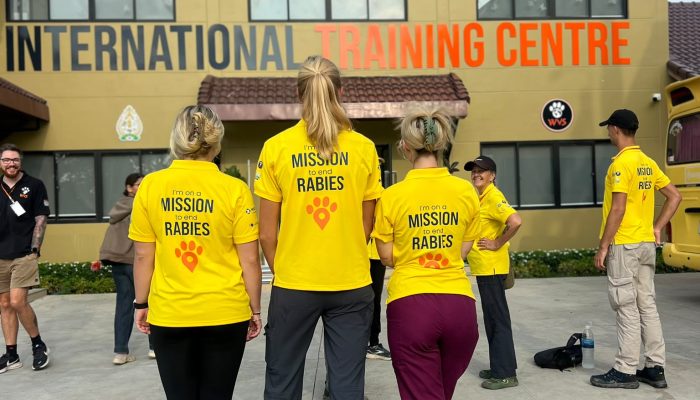
In October 2026, our colleagues Maria Coombes, Ellie Hollands and Amelia Wainwright travelled to Phnom Penh in Cambodia to support the Worldwide Veterinary Service (WVS) rabies vaccination programme.
Working alongside Mission Rabies, local veterinary professionals and international volunteers, they helped vaccinate dogs, protect communities and share veterinary knowledge. Here, Maria shares her experiences of this inspiring mission and the difference the team helped make.
16th October – 1st November 2026 - The Big Shot, Phnom Penh, Cambodia
When I first got the call that I was being given the opportunity to travel to Cambodia to volunteer on the Big Shot mass vaccination project with Worldwide Veterinary Service (WVS) and Mission Rabies, I honestly could not believe it. I knew it was going to be an incredible experience, but nothing could have prepared me for just how incredible and how much this trip would mean to me.
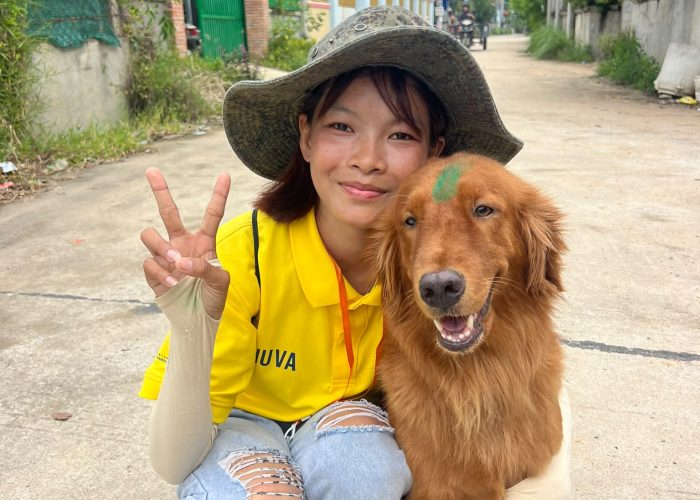
I have always been a HUGE lover of animals, but equally for people, travel, different cultures, and just experiencing the world beyond what I know. So, the opportunity to bring all of those things together, whilst being a part of a project that would make such a significant difference to the lives of both animals and people, was something I was SO excited about! I could never put into words how grateful I am to DNA Vetcare for making this trip possible for me.
So, what exactly was the mission?
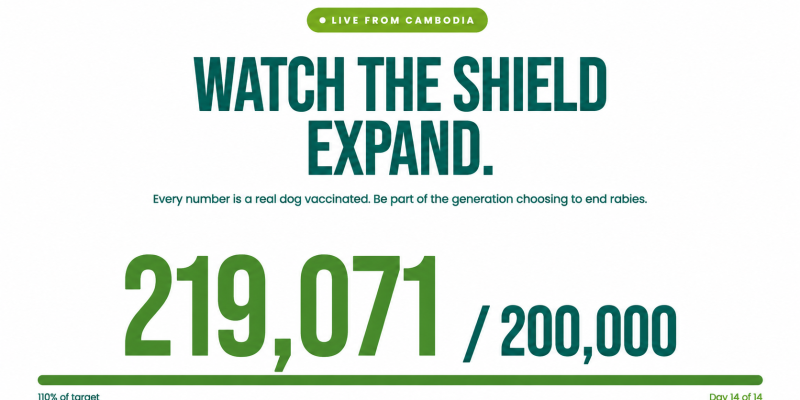
The Big Shot project had quite an ambitious target: to vaccinate 200,000 dogs across Cambodia, helping to eliminate dog-mediated rabies from the country. I am so proud to say that, collectively, we did not just reach this target, drumroll please… WE EXCEEDED IT!
By the end of the 14-day campaign, a whopping 219,071 dogs had been vaccinated across Cambodia and of those, 42,257 vaccinations took place in Phnom Penh. Rabies is a devastating disease, but it is entirely preventable. In Cambodia, approximately 99% of human rabies cases are caused by dog bites, which is why vaccinating dogs is so important. By protecting dogs against rabies, we are also protecting the communities and people living alongside them. The work WVS and Mission Rabies do is nothing short of remarkable. Their commitment goes far beyond vaccinations as they work tirelessly to improve animal welfare, provide veterinary treatment to animals in need, support local veterinary education and build sustainable programmes that make a lasting difference to communities. Being able to even be a tiny part of that work was so inspiring.
Life in the field: Tuk-tuk's, tropical heat, and no dog left behind!
Let’s just say, life in the field was not for the faint-hearted. With temperatures reaching 38°C, a generous coating of mosquito repellent and what sometimes felt like endless walking, our days were definitely full on!
Our working days ran Monday to Friday, starting at around 7am until round about 6pm. We were a group of 26 international volunteers (only 8 in the second week), working alongside two local veterinary schools and roughly 270 Khmer veterinary students. Every international volunteer was paired with a local student, as well as a tuk-tuk driver who would take us around our allocated areas of Phnom Penh each day. I also learned that they use a local tuk-tuk drivers’ association, helping provide employment opportunities for local drivers which was really special. It was another great example of how a mission like this also benefits the wider community.
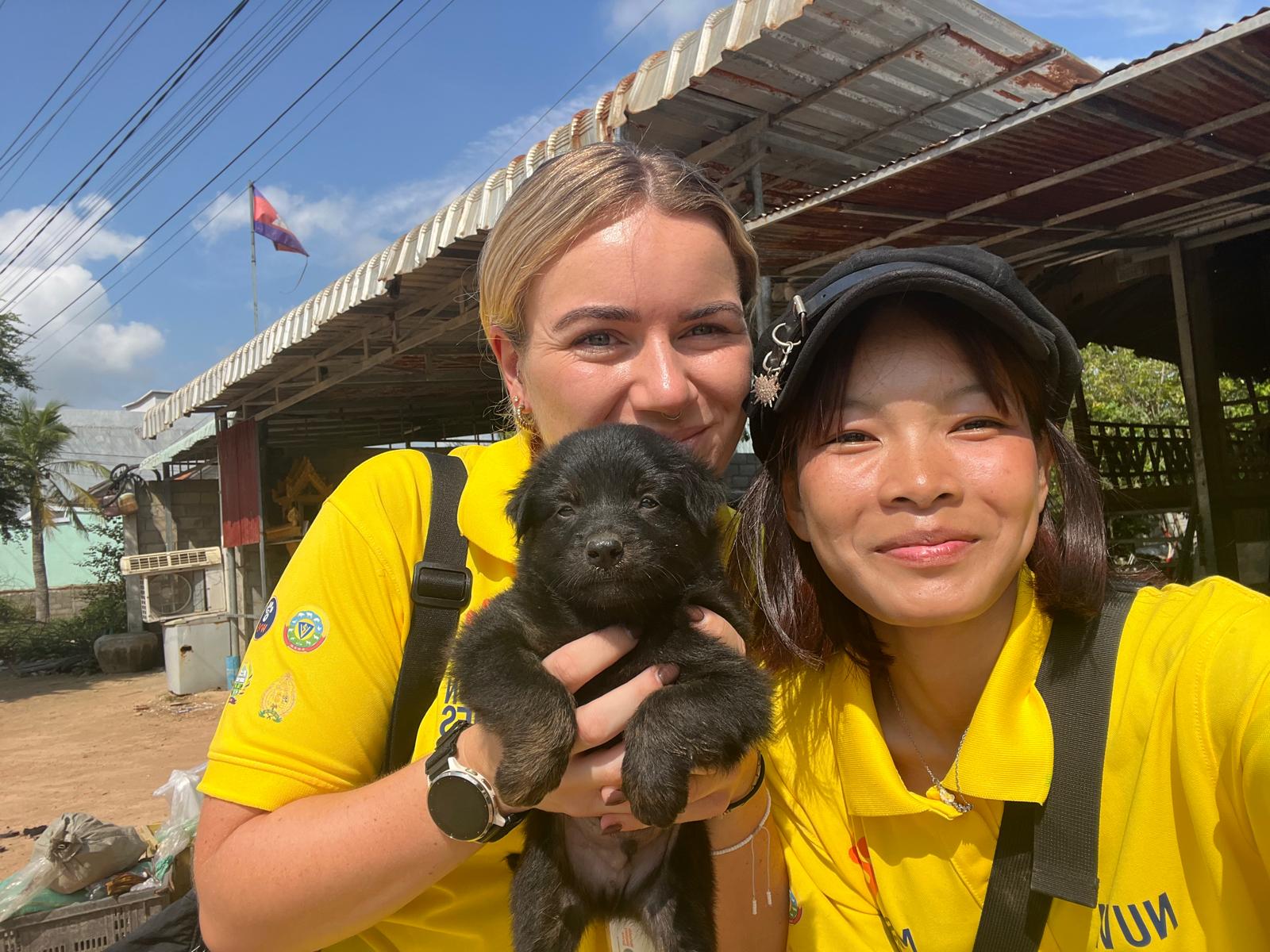
We were allocated specific areas to cover, with the aim of making sure that no path was left unwalked, and no dog left behind. We went door to door, speaking to families and vaccinating their dogs and also vaccinated stray and free-roaming dogs whenever it was safe and appropriate to do so. Village chiefs were informed about our visits and would sometimes join us along the way. This was super helpful as they knew their communities, often knew exactly which households had dogs, and helped introduce us to residents who may have been unsure about a group of strangers in bright yellow T-shirts turning up at their door!
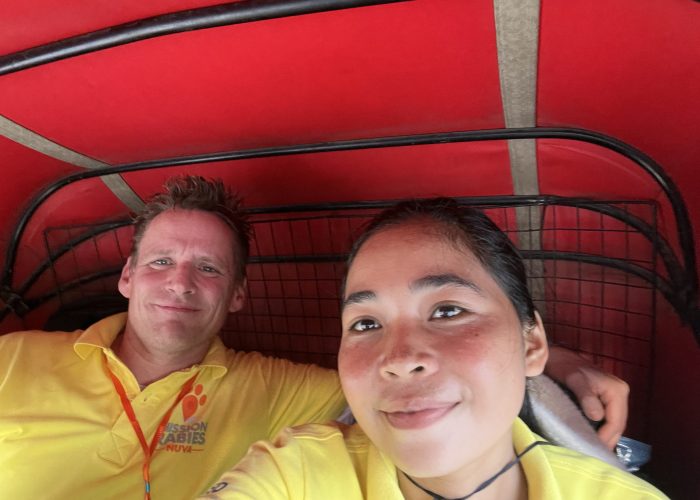
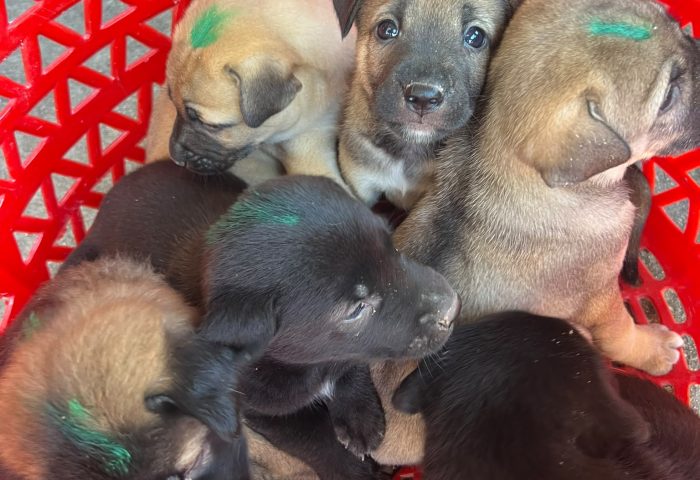
Every day was different. Some houses had one or two dogs, others had lots of dogs and lots of puppies, and sometimes you would walk down an alley to be greeted by 16 street dogs ganging up on you barking! Definitely one way to get your heart racing and maybe even make you have a 5-minute cry break in the tuk-tuk (definitely not speaking from personal experience). Catching some of the dogs wasn’t always easy either, it was extremely challenging working in unfamiliar surroundings, but with the help of our Khmer student partners, local communities and plenty of teamwork, we kept going.
The people who made it so special
Wow, the people on this trip were just the best.
I have made friends for life in the international volunteers. A bunch of really cool veterinary professionals and animal lovers coming together for exactly the same reason. The group was made up of people from all over the world, but we all shared the same passion and wanted to be part of something bigger than ourselves. The Khmer students were just fantastic. During the first week, I was partnered with Leng, a third-year veterinary student at Prek Leap National Institute of Agriculture. During the second week, our hub moved to the Royal University of Agriculture, where I was partnered with Hong Lee, also a third-year student. I honestly could not have asked for two better partners. They were both so lovely, so patient, welcoming, knowledgeable and passionate about the work they were doing.
Google Translate definitely had a workout (and I think my screen time hit an all-time high!), but somehow, we managed to communicate, work together and form such lovely bonds. It was so special getting to know them, learning about their lives and studies, and seeing first-hand the passion and dedication of the next generation of Cambodian veterinary professionals. I would not have been able to do the work that I did without them, and I hope they know just how much I appreciated them.
Another highlight was interacting with the local families. Everyone was so kind, welcoming and grateful for the work we were doing. I genuinely could not count the number of fresh coconuts, bottles of water, Sting energy drinks (highly recommend!) and even fresh pomelos knocked straight off the trees that were offered to us as thankyous. Those small gestures meant the world, that despite language barriers, you could feel the appreciation and kindness from every single person.
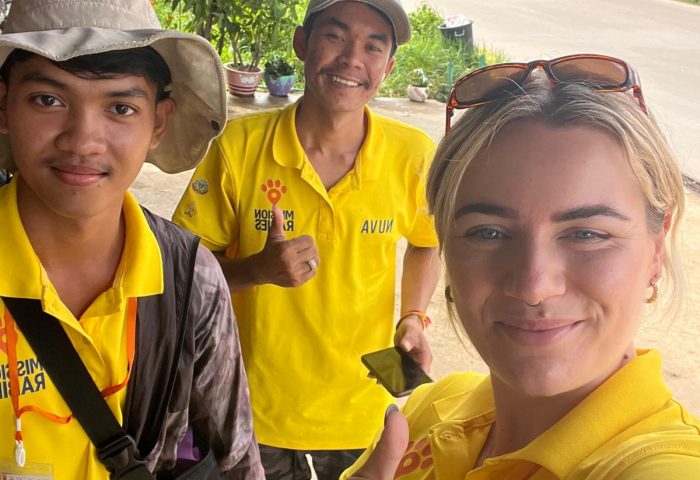
We got to experience parts of Cambodian life that you would never typically see on a normal holiday or trip to Phnom Penh, and these memories will stay with me forever. Alongside the volunteers, Khmer students, local communities, tuk-tuk drivers, veterinary teams, treatment teams and the awesome WVS and Mission Rabies organisers, it really was a collective effort. The project was not only about the number of vaccinations we could achieve. It was about bringing people together, supporting local communities, developing future veterinary professionals and creating a safer future for both animals and people in Cambodia. Whilst my own contribution was around 500 dogs, I know that collectively, every volunteer, every student and every member of the wider team played a part in something so much bigger.
Nearly 500 dogs... and a maybe a record number of cats!
Across my two weeks, I vaccinated close to 500 dogs in Phnom Penh. Pretty unbelievable! Every single vaccination represents another dog protected against rabies, another family with a little more peace of mind and another small step towards the bigger goal. However, whilst the focus of the Big Shot project was very much on dogs, I may have accidentally found myself competing for the unofficial title of most cats vaccinated! Cats can transmit rabies too, but because dogs are overwhelmingly responsible for transmitting rabies to humans, dogs remained the priority of the campaign.
There was one particularly memorable day when a village chief invited us into her home for lunch and to vaccinate her 30 cats! Between that, a few communication mishaps with my Khmer friends and some very enthusiastic cat owners, I think the chief cat vaccinator title might belong to me. I mean, try communicating how to hold 30 ‘not very happy’ cats for vaccinations in Khmer, we definitely liked living dangerously!
The side of the mission that stays with you
Whilst the entire experience was overwhelmingly positive, there were definitely some difficult moments too. We encountered some dogs living in some heartbreaking conditions, and seeing animals like this, knowing how much they need help, is never easy. However, one of the most incredible things about the project was knowing that we were not simply walking away from those situations. Alongside the vaccination teams, WVS had a dedicated treatment team working throughout the project. Using the project app, we could report any animals that needed veterinary attention, and the team would often arrive the same day or the following day to investigate, depending on urgency.
They travelled around in their Remorque, providing treatment where possible, or bringing animals back to the newly opened International Treatment Centre (ITC), based at the RUA. Seeing how quickly concerns would be acted upon was crazy. It meant that even when we encountered situations that were beyond what we could help with the vaccination volunteers, there was a team ready to jump in and give those animals the care and treatment they needed. It really demonstrates how much thought, organisation and dedication goes into making these projects work. WVS you are AMAZING.
Coming home with so much more than I arrived with
Looking back, this was without a doubt one of the hardest, most eye-opening and most rewarding experiences of my life. There were long days, aching feet, endless walking, heat, humidity, language barriers, sometimes scary dogs (!), and plenty of moments that pushed me way outside of my comfort zone. But life begins at the end of your comfort zone, right? However, the laughter, kindness, friendship, learning, and sense of purpose makes it all worthwhile. I came away with a much greater appreciation for the work that goes into improving animal welfare in countries where access to veterinary care isn’t always readily available. I also came away inspired by the dedication of the people working on the ground every single day to make a difference.
I am so grateful to have met such wonderful people, to have experienced Cambodian culture in such an authentic way and to have been welcomed into communities that made us feel like one of their own. I am equally grateful to have played even a tincy part in a much bigger mission, helping vaccinate over 219,000 dogs and bringing Cambodia one step closer to a future free from dog-mediated rabies. A great big thank you shout out to DNA Vetcare for sponsoring me and giving me this opportunity, and to WVS, Mission Rabies, the local vet schools, our Khmer student partners, the local communities in Phnom Penh and to every single person who made this mission possible. I would go back and do it all over again in a heartbeat.
Two weeks in Cambodia, nearly 500 dogs vaccinated, countless memories made and a little piece of my heart left behind. What an absolute privilege to have been a part of something so so special, I am eternally grateful. Thank you, thank you, thank you!